
Small Back Garden Makeover Ideas for West Dublin Homes
A small garden can become one of the most useful parts of a home when every section is planned carefully. Limited space does not require limited ambition, but it does benefit from a clear layout and a restrained choice of materials. These small back garden makeover ideas for West Dublin homes focus on practical improvements that can make compact gardens in Lucan, Adamstown, Palmerstown and Clondalkin feel more comfortable and easier to use.
The objective should not be to fit every possible garden feature into the available area. A successful compact garden normally performs two or three important functions well and leaves enough open space to feel relaxed.
Begin with measurements and priorities
Accurate measurements are especially important in a small garden because modest differences can determine whether a table, shed or path fits comfortably. Record the garden width and length, door and gate positions, changes in level, drainage points and features that must remain.
Next, decide what the space needs to do. A family may prioritise a safe lawn and storage, while another household may prefer outdoor dining and planting. Write down the essential uses before selecting materials. This prevents attractive but unnecessary features from consuming valuable space.
Access should form part of the plan. A clear route to the gate, bins or shed must remain usable even when furniture is in position. Allow doors and gates to open fully and consider how equipment will be moved through the garden.
Use a simple layout to make the garden feel larger
Too many divisions can make a compact garden feel smaller. One well-proportioned patio connected to a rectangular or gently shaped lawn is often more effective than several separate circles, paths and feature areas.
Lines can influence how the space is perceived. Paving laid in a consistent direction may lead the eye through the garden, while diagonal details can add a sense of width. The best choice depends on the shape of the plot and views from the house.
Maintain some open visual space. A lawn, generous paved area or uncluttered gravel section gives the eye somewhere to rest. Filling every boundary with deep features can create a narrow corridor through the centre.
Size the patio around real furniture
A common mistake is planning a patio without considering the furniture it will hold. Measure the table, chairs and barbecue or storage unit, then allow space for chairs to move and people to pass behind them. A patio that technically accommodates a table may still be uncomfortable if it leaves no circulation room.
Positioning the principal seating area near the house can make serving food and carrying items outside more convenient. In some gardens, however, the sunniest area is farther from the building. A compact secondary seat or bench at the rear can take advantage of evening light without requiring a second large patio.
Choose paving in a scale and colour that complements the home. Consistent, lighter finishes can help the area feel open, while suitable external texture and correct drainage remain essential for safe performance in wet weather.
Choose lawn and planting proportions carefully
A small natural lawn can provide colour and a soft surface without dominating the entire garden. Keep its shape easy to mow and avoid tiny corners around posts, trees or paving. Defined edging helps prevent grass spreading into borders and keeps the outline neat.
Artificial grass may suit households that do not want to mow, but it still needs professional ground preparation, drainage and occasional cleaning. It should not be laid over an existing uneven lawn or used to conceal a water problem.
Planting brings depth and seasonal change to a small plot. Borders do not need to run at the same narrow width around every side. One adequately sized bed can support healthier, layered planting and create more impact than several thin strips.
Use boundaries as part of the design
Fences occupy a large part of the view in many compact West Dublin gardens. Repairing mismatched or damaged panels can immediately make the space appear more coordinated. A consistent finish also creates a calmer background for plants.
Climbing plants can add greenery without taking up as much ground as large shrubs, but they need suitable support and enough space for their mature growth. Avoid attaching vigorous climbers directly to a fence that may need regular maintenance.
Privacy can sometimes be improved through the careful position of a small tree, pergola element or taller planting rather than increasing the height of every boundary. The solution should respect neighbouring properties and avoid creating excessive shade.
Add storage without letting it dominate
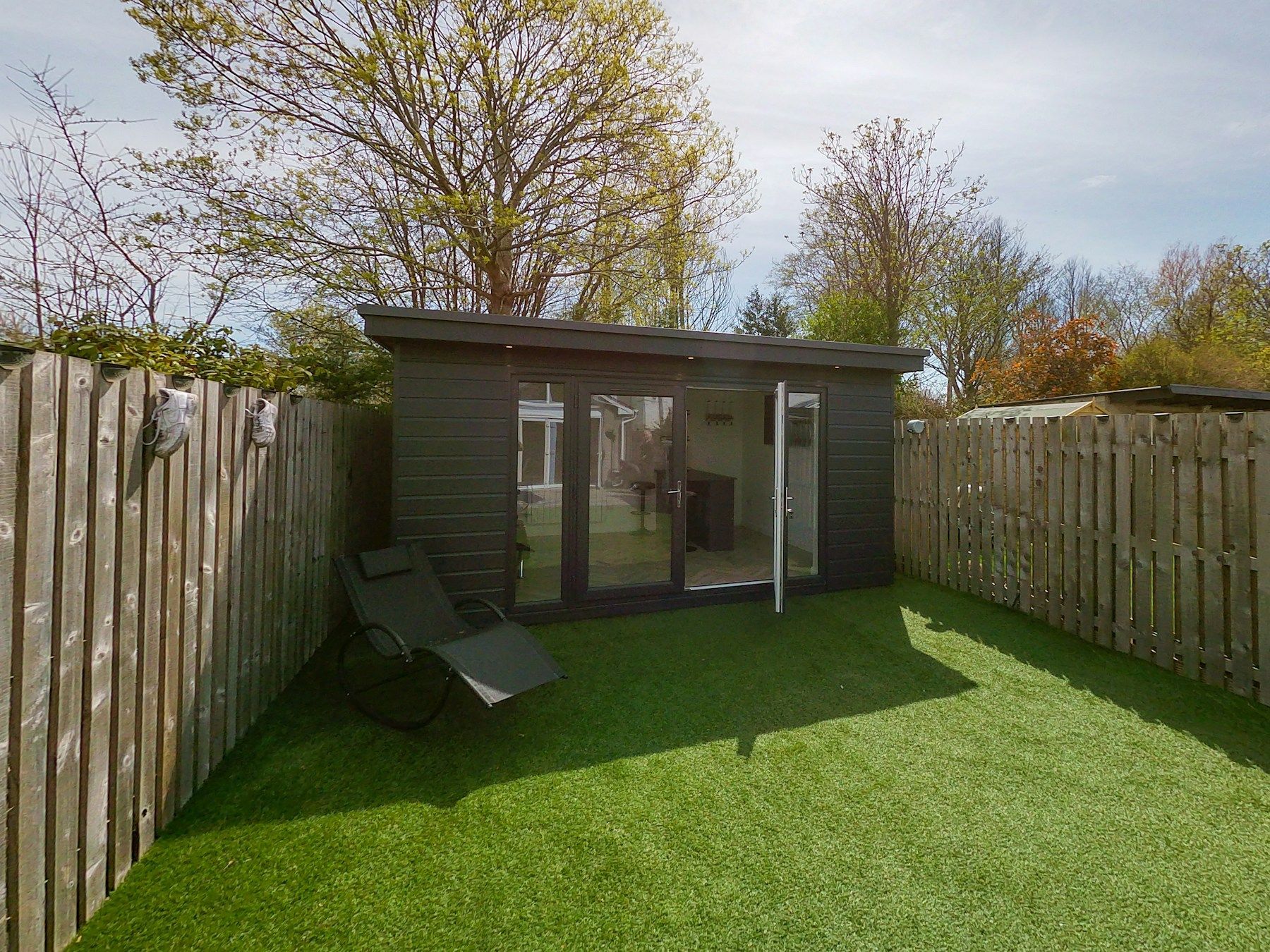
Storage is important in small gardens because loose tools, bicycles and furniture quickly create clutter. Select a shed according to the items that genuinely need protection. A tall but compact unit may use the footprint more efficiently than a deep structure, provided it remains practical to access.
The shed or storage box should sit on a stable, level base and allow doors to open freely. Positioning it near an access route makes regular use easier. If it is visible from the house, a coordinated colour or planting beside it can help it sit more comfortably within the design.
Built-in benches with storage can serve two purposes, but they need durable materials and ventilation so damp items are not enclosed.
Use a limited range of materials and features
Repeating a small palette helps a compact garden feel coherent. Two complementary hard-landscaping finishes, one fence colour and repeated plant groups are usually enough. Too many paving types, ornaments and colours can fragment the space.
Useful features for smaller gardens include:
- wall-mounted or carefully positioned lighting;
- one focal planter or specimen plant;
- raised beds at a comfortable working height;
- a simple bench placed at the end of a view;
- permeable gravel for an informal secondary area.
Lighting should support safe movement and create atmosphere without shining into neighbouring windows. Plan cables and fittings during the main works so they do not need to be added awkwardly afterwards.
Make preparation count
Small gardens often experience intensive use, so foundations, drainage and soil preparation matter just as much as they do on a larger project. Stable paving bases, suitable falls, properly prepared lawns and secure boundaries help the finished space withstand daily activity and Irish weather.
APCO has more than 30 years of landscaping experience and works with homeowners throughout Lucan and nearby communities. If you would like help turning a compact back garden into a practical, attractive outdoor space, call 01 626 3496 to discuss ideas and request a quotation.
Recent Posts