
Complete Garden Makeovers in Lucan: Where to Start
A complete garden makeover can change how you use your home. An awkward or neglected garden may become a practical place for children to play, a comfortable space for entertaining, or a calmer outdoor area that is easier to maintain. For homeowners considering a complete garden makeover in Lucan , the best results begin with careful planning rather than choosing paving, fencing or plants in isolation.
Gardens around Lucan, Leixlip, Adamstown and Palmerstown vary considerably in size, level, soil condition and access. A good makeover responds to the actual site and the way the household wants to use it. Taking time to understand those factors at the beginning can prevent expensive changes later.
Start with an honest assessment of the garden
Before deciding what the finished garden should look like, examine what is already there. Note areas that remain wet after rain, surfaces that have moved or cracked, damaged boundaries, overgrown planting and changes in ground level. It is also useful to watch how sunlight moves through the garden. A seating area that looks ideal on a plan may be shaded at the time of day when you would most often use it.
Some existing features may be worth retaining. A healthy mature tree, sound fencing or established shrubs can give a new garden structure immediately. Other elements may be creating ongoing problems. Poor drainage, unsuitable paving falls or an unstable shed base should normally be addressed before decorative work begins.
Access matters too. In many west Dublin developments, the only route to a back garden is through a side passage with limited width. This can affect how materials and machinery are brought in and how waste is removed. Identifying access restrictions early makes the project easier to organise.
Decide what the garden needs to do
A successful garden should suit the household, not simply follow a photograph or short-lived trend. Think about the activities that need to fit into the space. These might include outdoor dining, play, storage, gardening, pets, bin access or a route between the house and a rear gate.
It helps to separate essential requirements from optional features. A practical priority list might include:
- a safe, level route from the house;
- a patio large enough for a table and chairs;
- a usable lawn or low-maintenance alternative;
- secure fencing and gates;
- storage for tools, bicycles or garden furniture;
- planting that provides colour without excessive upkeep.
Once the essentials are clear, decorative choices become easier. The layout can be designed around how people will move through and occupy the garden instead of trying to fit too many unrelated features into a limited area.
Plan the layout before selecting materials
The proportions of the main areas have a significant effect on how a finished garden feels. A patio that is too small can be difficult to furnish, while one that occupies most of the garden may feel hard and exposed. Similarly, narrow leftover planting strips can be difficult to maintain and may not provide enough room for plants to develop.
In smaller Lucan gardens, simple shapes and clear lines often create a more spacious appearance. One well-positioned patio, a defined lawn and adequately sized borders may work better than several tiny zones. Changes in direction, planting or surface texture can still add interest without making the layout busy.
Consider views from inside the home as well. The garden is visible throughout the year, including during wet winter months. A focal tree, attractive boundary or structured evergreen planting can make the outlook more appealing even when the garden is not being used.
Put drainage and ground preparation first
Irish weather makes drainage one of the most important parts of a garden makeover. New paving, turf, artificial grass and gravel all depend on suitable preparation underneath. Covering a problem area with a new surface will not correct the cause of standing water.
Paved areas need appropriate falls so rainwater moves away from buildings and does not collect in low spots. Lawn areas require a suitable growing layer and ground that is prepared without harmful compaction. Retaining edges and changes in level must also be stable. Where the site has persistent drainage problems, a more specific solution may be required after the ground conditions are assessed.
Much of this work disappears beneath the finished garden, but it strongly influences how long the makeover performs. A sound base, correct levels and sensible water management are more valuable than choosing a premium surface laid over inadequate preparation.
Choose materials for appearance and upkeep
Materials should complement the house while matching the amount of maintenance you are willing to undertake. Porcelain paving offers a clean, consistent finish and relatively straightforward cleaning. Natural stone provides individual colour and texture but may require different care. Gravel can be useful for informal areas and driveways when installed with suitable edging and a properly prepared base.
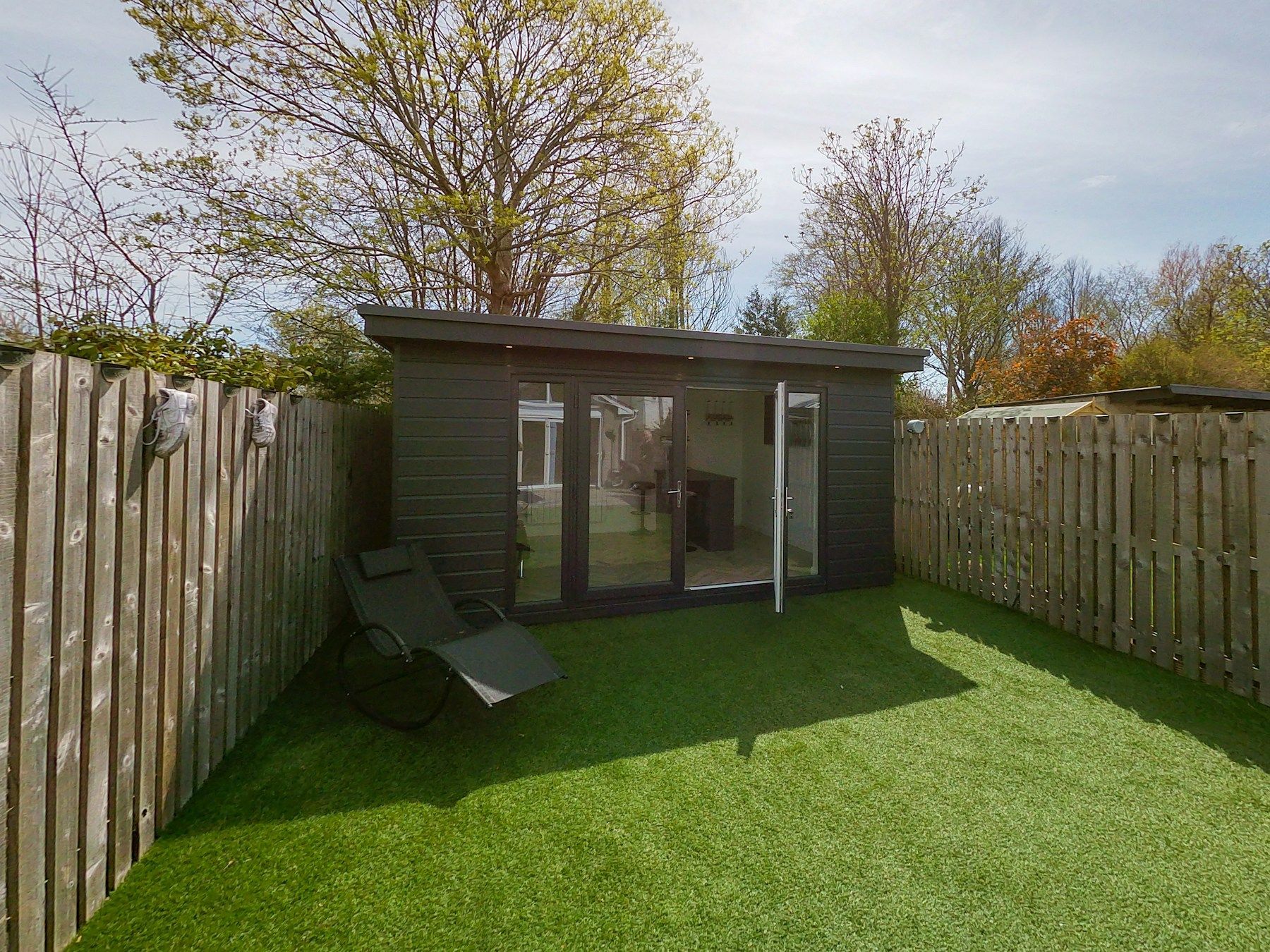
For lawns, natural turf gives a soft, living surface but needs mowing, feeding and seasonal attention. Artificial grass reduces mowing but still requires correct drainage, occasional brushing and cleaning. Timber decking has a warm appearance and requires periodic maintenance, while composite decking offers a different balance of upkeep, appearance and initial investment.
A restricted palette usually produces a more coherent result. Repeating one or two surface colours in paving, edging, fencing and containers can connect separate areas of the garden.
Build planting into the design
Planting should not be treated as the final decoration. It softens hard landscaping, provides privacy, supports wildlife and helps a new garden settle into its surroundings. The right plants depend on light, soil, exposure, available space and the level of care the homeowner can provide.
A practical scheme can combine evergreen structure with seasonal flowers and shrubs of different heights. Plants should be spaced for their mature size rather than crowded for an immediate effect. This improves air movement and reduces the need for continual pruning.
For lower-maintenance gardens, fewer well-chosen varieties planted in groups are often easier to manage than many individual specimens with different needs.
Use one coordinated plan for the whole makeover
A complete garden renovation often involves clearance, groundworks, drainage, paving, fencing, lawns, planting and possibly a shed or deck. Coordinating these elements in the right sequence reduces disruption and prevents finished work from being damaged by later stages.
APCO brings more than 30 years of experience to garden makeovers across Lucan and surrounding areas. If you are considering a full redesign or need advice on what can realistically be achieved in your space, call 01 626 3496 to discuss the garden and arrange a quotation.
Recent Posts